
Punch needle is a raised embroidery technique that is becoming increasingly popular due to its ease and versatility. However, as with any new skill, it is normal to encounter some challenges when starting out. In this article, we will explore the most common problems beginners face and how to solve them so you can fully enjoy this technique.
1. Choosing the wrong materials.
Problem:
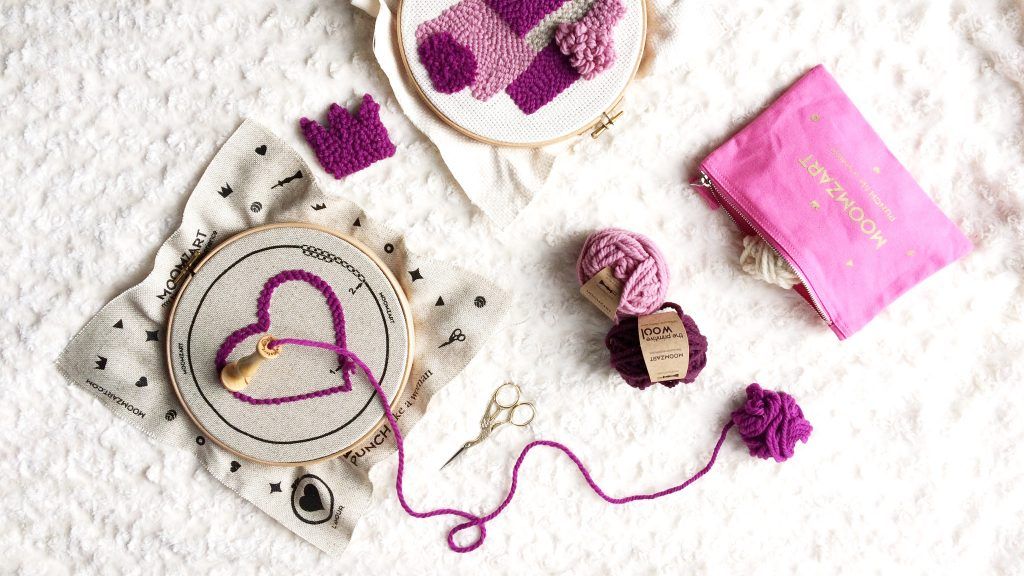
One of the most common mistakes when starting out with punch needle is using inappropriate materials. If the needle does not pierce the fabric properly, if the frame does not hold it properly or if the wool slides with difficulty, the process can become frustrating.
Many people decide to learn punch needle by purchasing loose material from the internet or from haberdasheries without proper advice. This often results in a combination of tools that do not work well together, leading to frustration and difficulties in punching correctly.
Some needles on the market, such as the DMC punch needle, can cause issues like poor fabric perforation and needle breakage, depending on the fabric used.
Solution:
✅ Suitable needle: Use a high-quality needle such as the Oxford needle so that you can pierce the fabric easily.
✅ Firm Frame: A thick wooden frame keeps the fabric securely in place and prevents it from constantly loosening.
✅ Correct fabric: use monk cloth, or better yet, Abbess cloth, avoiding fabrics that are too fine or have loose fibers.
✅ Appropriate wool: using a natural rustic 100% wool allows the wool to grip the fabric perfectly and create the best loops.
✅ Buy complete kits: Choosing a quality punch needle kit, with all compatible materials, ensures a frustration-free start.
2. The fabric is not stretched tightly.

Problem:
If the fabric is not tight enough on the hoop, loops may come loose, the needle may get caught, or the work may lose its shape.
Solution:
✅ Stretch the fabric tightly on the frame before you begin. It should sound like a drum when you tap it gently with your fingers.
✅ Readjust the tension of the fabric from time to time as you progress through your project.
✅ Use a good quality frame with a strong grip to prevent the fabric from constantly loosening.
3. Not punching the fabric all the way to the needle stop.
Problem:
One of the most common mistakes is not piercing the fabric far enough. If the needle does not go all the way through the fabric, the loops will not hold properly and could easily come loose.
Solution:
✅ Punch without fear: insert the needle until the handle touches the fabric.
✅ Gently lift the needle without pulling too hard to keep the loops in place.
✅ Maintain a steady rhythm to prevent the loops from becoming uneven or coming loose.
4. The wool gets stuck or does not slide well.
Problem:
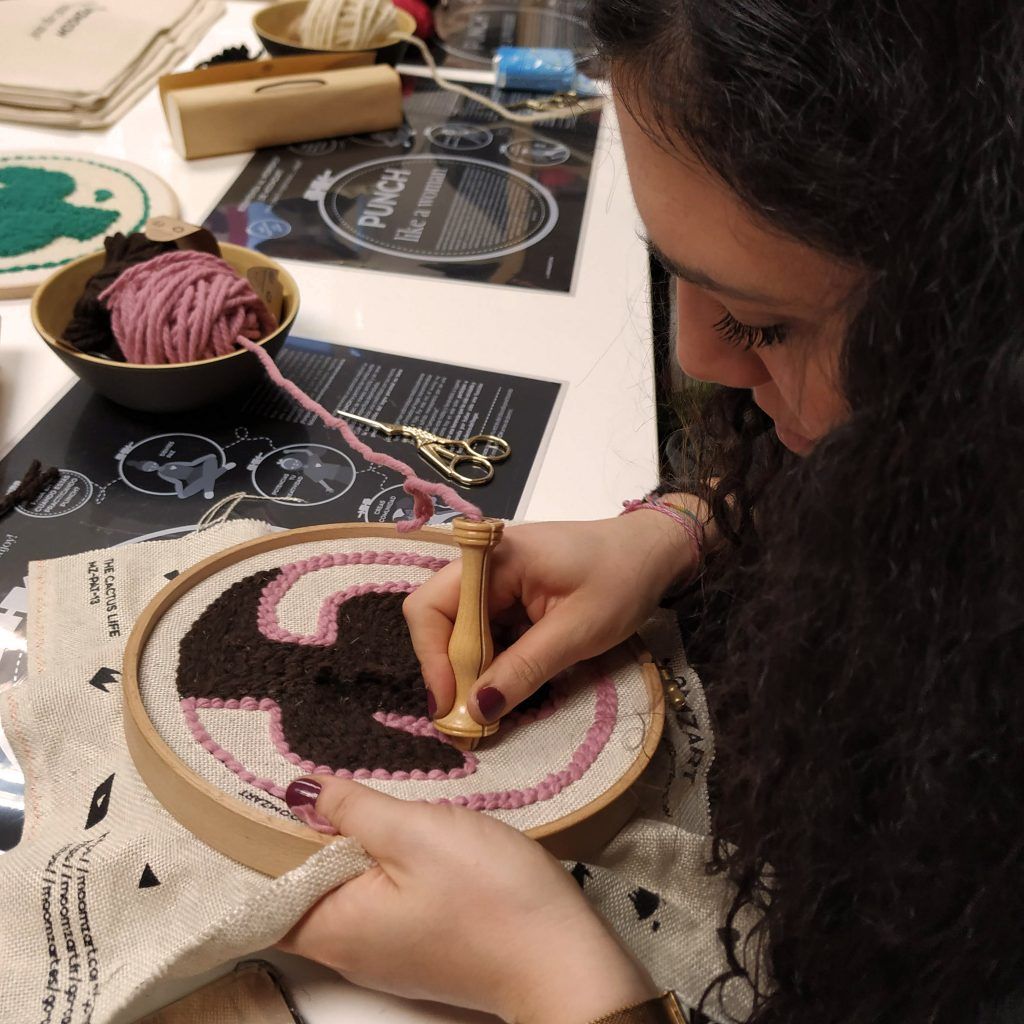
If you feel that the wool doesn’t flow smoothly through the needle, it’s likely that there is too much tension or a tangle in the fiber.
Solution:
✅ Make sure the wool strand is loose and tension-free while you work.
✅ Use quality wool that does not tangle or knot easily.
✅ Pass the wool correctly through the needle to prevent it from getting stuck or breaking.
✅ Choose a natural rustic 100% wool, as its texture allows the loops to grip the fabric better.
5. The loops come loose or the design unravels.
Problem:
If the loops don’t stay securely in the fabric or unravel easily, it may be due to wool tension issues or incorrect punching technique.
Solution:
✅ Do not lift the needle too much between stitches. It should stay close to the fabric so the loops form correctly.
✅ Make sure the needle is completely piercing the fabric to secure the loops properly.
✅ Use thick wool or adjust the technique if you notice that the loops are not firm.
6. Not finishing the work well.
Problem:
If the stitches are not finished properly, the design can fall apart over time and lose its shape.
Solution:
✅ Always cut the yarn on the loop side, regardless of whether the right side is the loop or the flat stitch.
✅ Gently press the loops when finished to ensure they stay in place.
7. The design doesn't turn out the way you expected.
Problem:
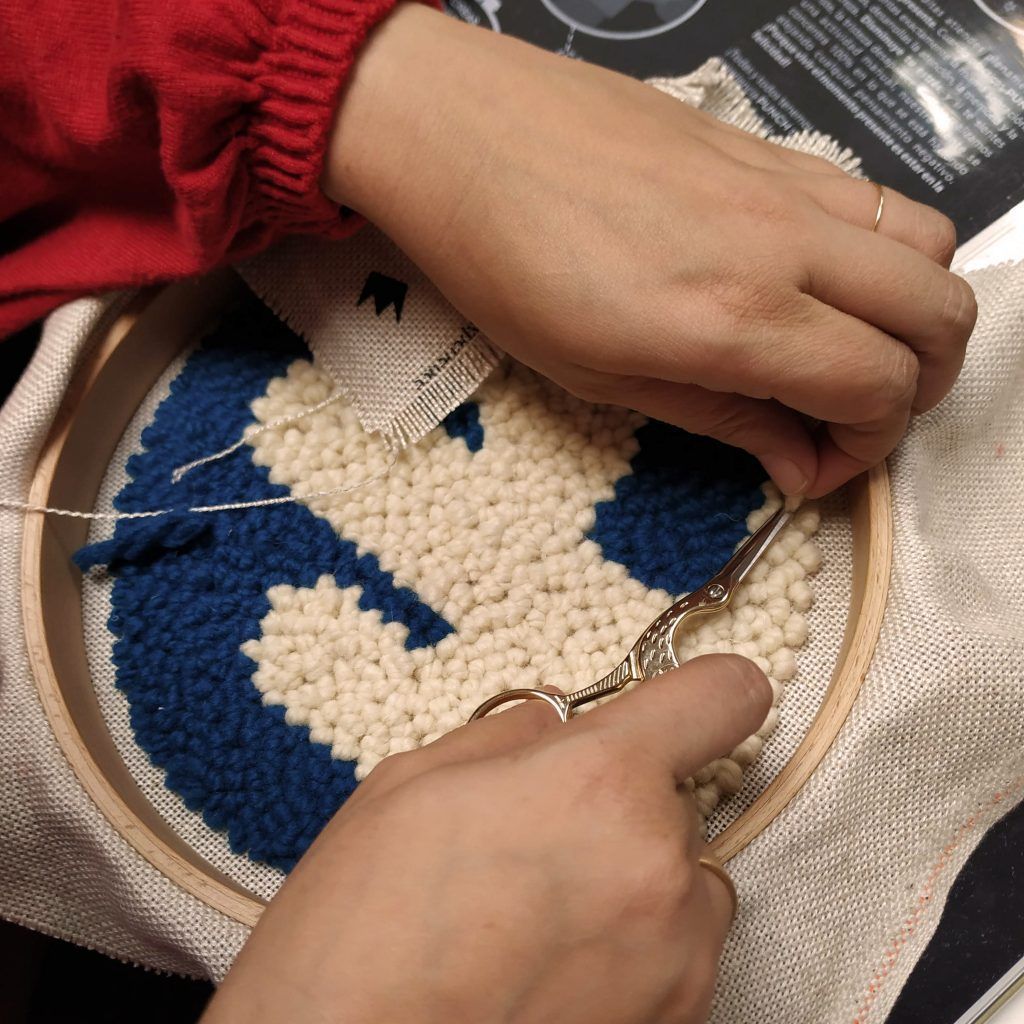
Sometimes beginners can get frustrated because the end result is not exactly how they imagined.
Solution:
✅ Practice on a sample first to familiarize yourself with the technique.
✅ Start with simple designs and then move on to more complex patterns.
✅ Be patient: every project is an opportunity to improve and perfect your technique.
punch needle is an accessible and rewarding technique, but it's normal to encounter challenges when starting out. With the right materials, good technique, and a little practice, you'll be able to master the art of punch needle without any problems.
 instagram
 Youtube